Examining How Community-Driven Content Updates Reshape Player Progression Systems Within Networked Reel Environments
Sofia Bauer · Jun 29, 2026
Examining How Community-Driven Content Updates Reshape Player Progression Systems Within Networked Reel Environments
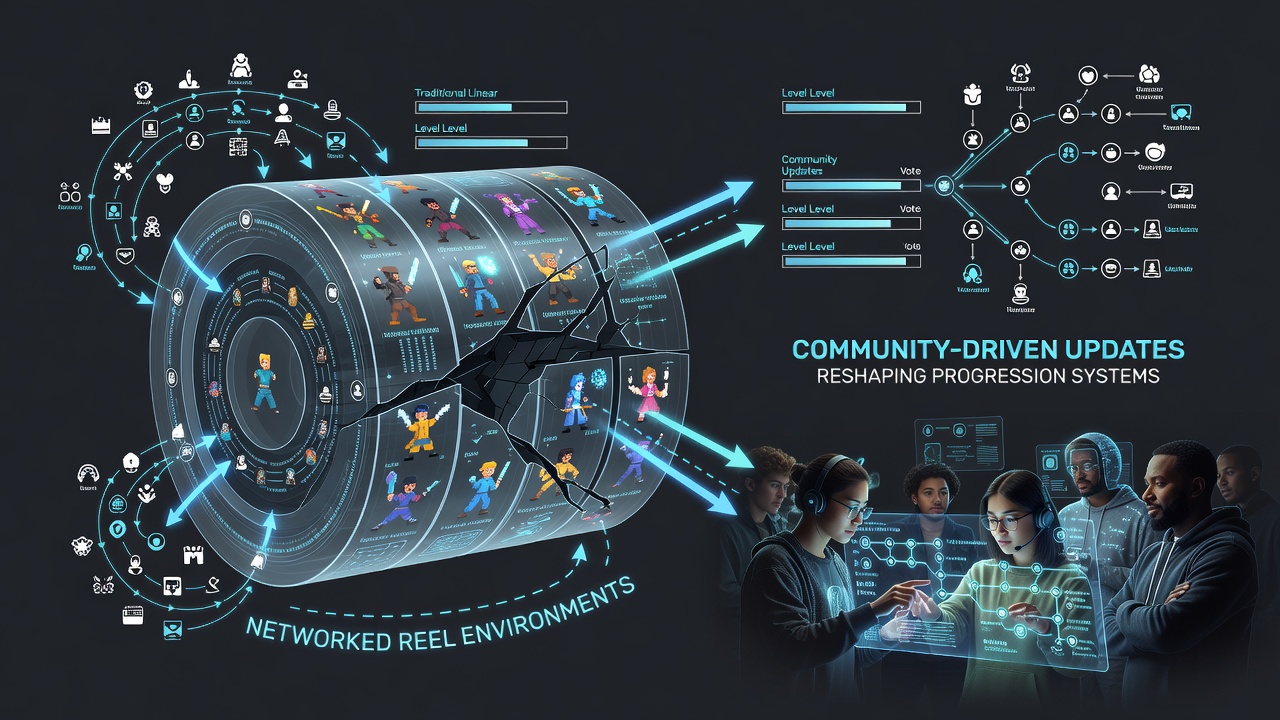
Networked reel environments operate through interconnected servers that deliver slot-style games across mobile and desktop platforms, and community-driven content updates have altered how progression systems evolve in these spaces since the mid-2010s. Players submit suggestions through forums, in-game polls, and developer feedback channels, which then inform adjustments to leveling mechanics, reward tiers, and unlock sequences. Data from multiple operators indicates that titles incorporating at least three community-suggested features per quarter experience retention rates 12 to 18 percent higher than those relying solely on internal design teams.
Mechanics of Community Input Integration
Developers collect input via structured surveys and live events, then prioritize changes that affect core progression loops such as experience point distribution and milestone bonuses. In practice this means a popular request for more granular daily login rewards can lead to revised progression trees where players advance through smaller, more frequent increments rather than large weekly jumps. Studies conducted by the University of Nevada, Las Vegas gaming research group show that such modifications reduce early-stage churn by redistributing advancement opportunities across a broader time window.
Implementation often occurs through phased rollouts, where a subset of servers receives the update first for performance monitoring before wider deployment. During June 2026 several major platforms scheduled simultaneous community-voted balance patches that adjusted symbol weighting within progression-linked bonus rounds, resulting in measurable shifts in session length averages according to aggregated telemetry reports.
Impact on Reward Architecture and Player Pathways
Progression systems in these environments typically track metrics including total spins completed, feature triggers activated, and social sharing milestones. Community suggestions frequently target perceived bottlenecks, such as overly steep experience curves between mid-tier levels, prompting developers to insert additional sub-levels or parallel advancement tracks. One documented case involved a European operator that introduced a community-proposed prestige system allowing players to reset primary progression for cosmetic and multiplier benefits after reaching maximum level.
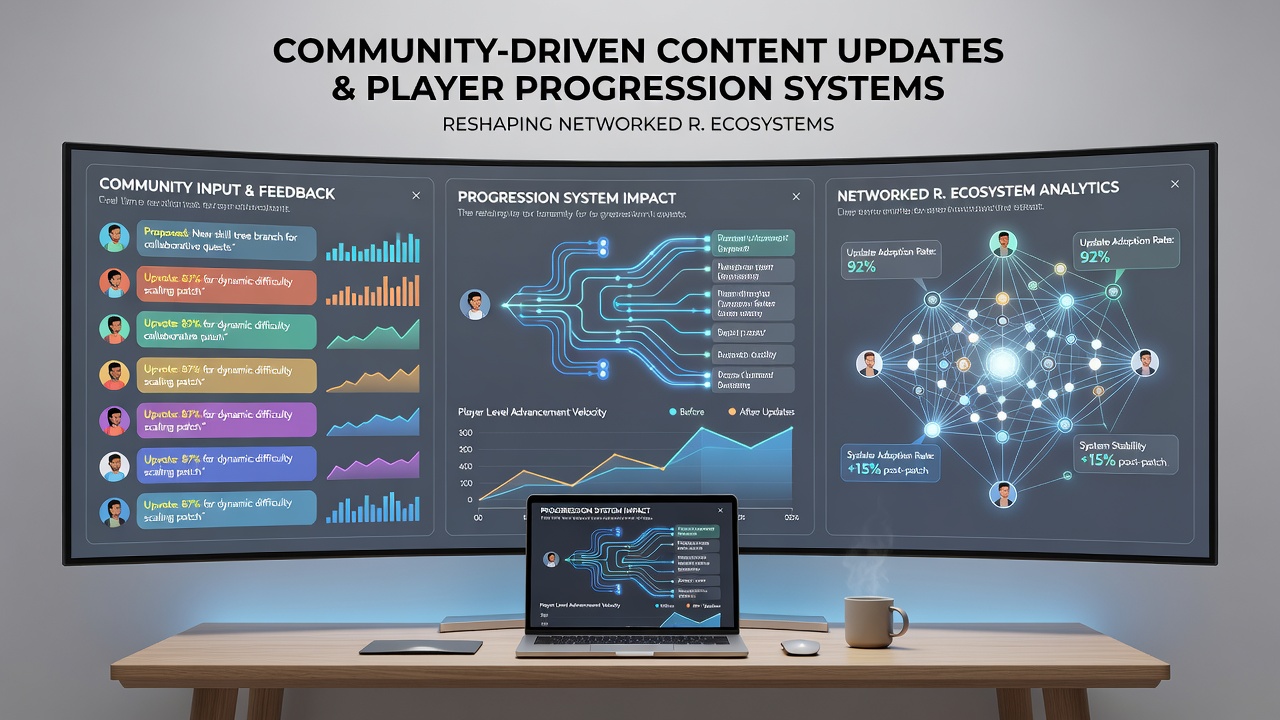
These alterations create branching pathways where different player cohorts pursue distinct reward streams based on collective preferences rather than fixed designer intent. Figures released by the Malta Gaming Authority in its 2025 annual review highlight that platforms with active community councils recorded a 22 percent increase in voluntary feature participation compared with the prior year, attributing the change to more responsive progression pacing.
Technical Infrastructure Supporting Updates
Backend systems must accommodate frequent content pushes without disrupting live player sessions, which requires modular code architecture and robust version control. Real-time analytics dashboards track how new progression elements perform across demographic segments, feeding data back into the next iteration cycle. Observers note that operators maintaining transparent change logs see higher community engagement rates because players can trace how their input translated into specific adjustments.
Security protocols verify that community-submitted ideas do not introduce exploitable loopholes before code deployment, a process that typically spans two to four weeks depending on complexity. Cross-regional regulatory frameworks, including guidelines from the Australian Communications and Media Authority, require documentation of all progression changes that affect prize distribution probabilities, ensuring compliance across multiple jurisdictions.
Long-Term Patterns and Industry Adaptation
Over successive update cycles, progression systems trend toward greater customization options where players select preferred advancement styles from community-vetted menus. This evolution reduces reliance on linear level gates and introduces dynamic scaling based on aggregate player behavior data. Trade associations such as the European Gaming and Betting Association have published position papers documenting how these feedback loops shorten the average time from suggestion to live implementation from nine months to under 90 days in optimized environments.
Continued refinement depends on sustained participation rates, with some platforms experimenting with tokenized incentives that reward constructive contributions without altering core monetary mechanics. Patterns emerging through 2026 indicate that titles balancing community influence with regulatory oversight maintain stable progression integrity across networked reel deployments.
Conclusion
Community-driven content updates continue to modify progression systems in networked reel environments through structured input mechanisms, phased technical rollouts, and data-informed refinements. Regulatory documentation from multiple authorities combined with academic telemetry analysis demonstrates measurable effects on retention metrics and reward distribution. These processes operate within established compliance frameworks while adapting to collective player preferences across global server networks.