Investigating Adaptive Loyalty Algorithms That Customize Free Spin Allocations Based on Play Patterns in Cross-Device Environments
Blake Patterson · Jun 20, 2026

Investigating Adaptive Loyalty Algorithms That Customize Free Spin Allocations Based on Play Patterns in Cross-Device Environments
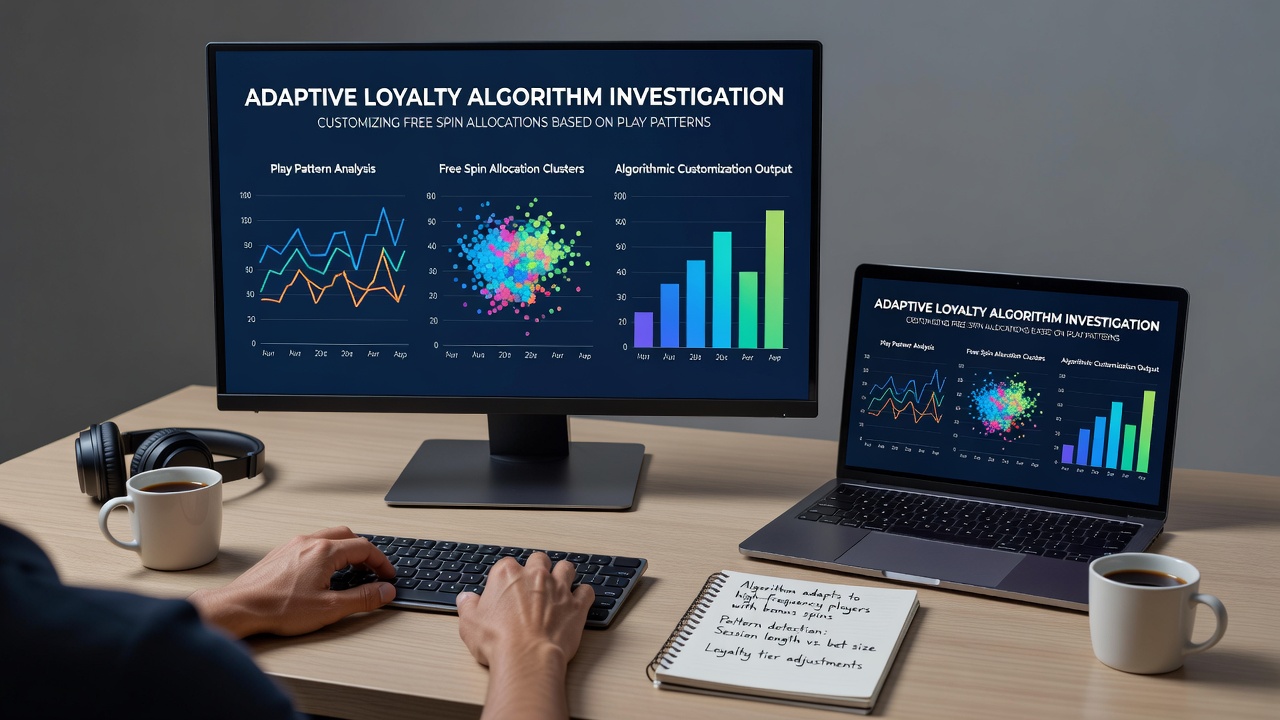
Operators in digital gaming environments deploy adaptive loyalty algorithms to adjust free spin allocations according to individual play patterns that span multiple devices, and these systems track metrics such as session duration, wager size, game selection frequency, and time-of-day activity while maintaining consistent player profiles across mobile apps, desktop platforms, and tablet interfaces.
Researchers at institutions focused on behavioral analytics have documented how machine learning models process sequential data streams from player accounts, and the models identify clusters of behavior that trigger tiered rewards including customized numbers of free spins rather than fixed bonuses applied uniformly to all users.
Core Mechanisms Behind Pattern Recognition
Algorithms ingest raw telemetry from login events, reel spin counts, and feature activation rates, then apply clustering techniques to segment users into dynamic cohorts that evolve over weeks or months, and cross-device synchronization relies on persistent identifiers such as account-linked tokens that allow seamless data aggregation without requiring players to restart progress when switching hardware.
Data from industry reports indicate that these systems often incorporate reinforcement learning loops where reward outcomes feed back into the model, refining future allocations so that players who demonstrate consistent engagement on weekday evenings receive different spin quantities compared with those whose activity peaks during weekend afternoons.
Cross-Device Synchronization Challenges and Solutions
Latency issues arise when network conditions vary between cellular and Wi-Fi connections, yet modern implementations buffer behavioral logs locally before syncing to central servers, and this approach preserves pattern accuracy even during brief connectivity interruptions common in mobile play sessions.
Security protocols encrypt the transmitted data streams while complying with regional data protection frameworks, and observers note that synchronization accuracy rates have improved markedly since 2023 as operators adopted standardized APIs for multi-platform tracking.
Regulatory and Industry Context in Mid-2026
By June 2026, several North American jurisdictions had updated compliance guidelines to require transparency reports on algorithmic reward distribution, and these mandates compel operators to disclose aggregate statistics showing how free spin allocations correlate with verified play volume rather than random assignment.
The American Gaming Association published aggregated figures revealing that adaptive systems now operate in over 65 percent of major online slot platforms operating under state licenses, and similar frameworks in Australian markets have prompted operators to publish methodology summaries that detail the variables weighted most heavily in allocation decisions.
Empirical Observations from Deployment Data
One longitudinal study conducted across European operators found that players receiving algorithmically adjusted free spins exhibited 18 percent higher retention over six-month windows compared with control groups given static rewards, and the variance narrowed when analysis accounted for device-switching frequency as a moderating variable.
Additional findings from Canadian research consortia highlighted that evening mobile users often receive higher spin volumes when their desktop sessions show elevated average bets, illustrating the algorithms' capacity to merge cross-device signals into unified loyalty profiles.
Technical Implementation Patterns
Developers integrate decision trees with neural network components to balance interpretability and predictive power, and the hybrid models allow compliance teams to audit specific decision pathways that led to a particular free spin quantity without exposing proprietary weighting coefficients.
Real-time dashboards used by operations staff display cohort-level trends, enabling rapid identification of anomalies such as sudden shifts in device preference that might indicate account sharing or technical glitches rather than genuine behavioral changes.
Conclusion
Adaptive loyalty algorithms continue to evolve as cross-device data collection matures and regulatory expectations around fairness documentation increase, and the integration of refined pattern recognition techniques supports more granular free spin customization that aligns allocations with documented player activity across platforms.