Mapping Achievement System Integrations with Payout Variance Controls in Cross-Platform Gambling Applications
Sofia Bauer · Aug 3, 2026

Mapping Achievement System Integrations with Payout Variance Controls in Cross-Platform Gambling Applications
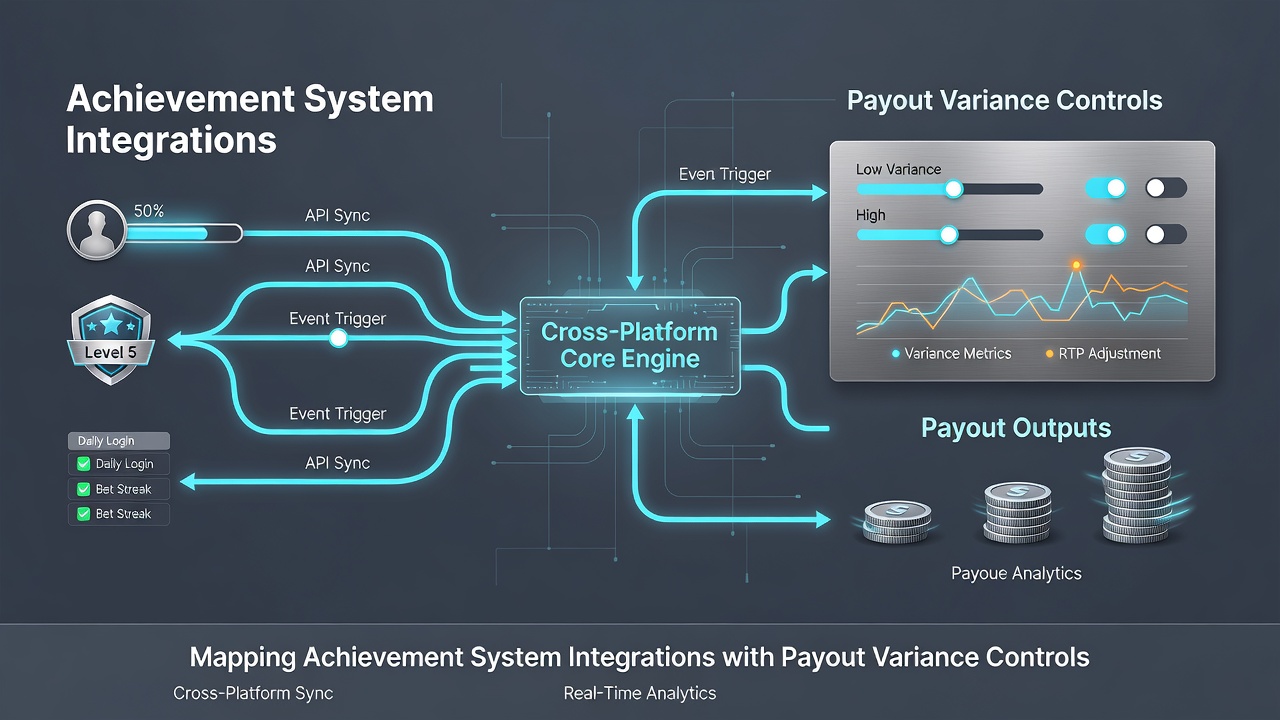
Cross-platform gambling applications now combine achievement systems with payout variance controls to manage player engagement while meeting technical and regulatory demands. Achievement systems track milestones such as completed levels, accumulated playtime, and specific task completions, and these elements connect directly to variance settings that adjust win frequency and payout sizes across devices. Developers map these integrations through shared databases that sync user progress from mobile to desktop sessions, ensuring consistent data flow even when players switch platforms mid-session.
Research indicates that achievement triggers often activate variance adjustments in real time. For instance, reaching a loyalty tier might shift a game's payout distribution from high-variance to medium-variance mode, which alters reel outcomes without changing the core random number generator. Studies from multiple operators show this mapping occurs through API layers that communicate between the achievement engine and the payout controller, allowing updates to propagate within seconds of a milestone event.
Technical Architecture Behind the Mapping
Engineers build the core mapping using modular code structures where achievement data feeds into variance algorithms via standardized event listeners. Each achievement carries metadata tags that reference specific variance profiles, and these profiles define parameters such as hit frequency, bonus round probability, and maximum win multipliers. Cross-platform compatibility requires these profiles to reside in cloud-based repositories that mobile and desktop clients query simultaneously, preventing desync issues that could otherwise distort payout behavior.
One implementation example involves a tiered achievement ladder where early milestones unlock low-variance modes for new players, while advanced achievements permit higher variance options. Data from platform logs reveal that this layered approach maintains session length consistency across operating systems, with synchronization occurring through timestamped event queues that resolve conflicts when a player logs in from a different device.
Payout Variance Controls and Achievement Triggers
Variance controls operate by modulating the underlying probability tables that determine symbol distributions and bonus activations. When integrated with achievements, these controls receive input signals from the achievement system at defined intervals, such as after every ten completed tasks or upon reaching cumulative wager thresholds. Operators document that this integration allows dynamic recalibration of payout curves, keeping overall return-to-player percentages within approved ranges while responding to individual progress markers.
Figures from industry reports show variance shifts typically range between 0.5 and 2.0 standard deviations from baseline settings, with changes applied only after verification that the achievement condition has been met on the current platform. Cross-platform applications employ checksum protocols to confirm that the same achievement state exists regardless of access point, which reduces discrepancies in payout behavior during device transitions.
Regulatory and Compliance Considerations in August 2026
Regulatory bodies in several jurisdictions require detailed documentation of how achievement systems influence payout variance. In August 2026, updates from the Nevada Gaming Control Board emphasized the need for transparent mapping logs that auditors can review during compliance checks. These logs must record every variance adjustment tied to an achievement event, including the exact parameters changed and the platform from which the trigger originated.
Similar requirements appear in guidelines issued by Australian state regulators, where operators submit integration diagrams that illustrate data pathways between achievement modules and variance engines. Compliance teams note that failure to maintain synchronized records across platforms can result in temporary suspension of feature approvals until discrepancies are resolved.
Cross-Platform Synchronization Challenges
Platform differences in processing speed and network latency create hurdles when mapping achievement data to variance controls. Mobile sessions often experience brief delays in event reporting compared with desktop connections, which can cause temporary variance mismatches if not buffered correctly. Developers address this through queued update systems that hold variance changes until confirmation arrives from all active devices linked to the same player account.
Testing data collected by several large operators demonstrate that buffer windows of three to five seconds eliminate most synchronization errors without noticeably affecting gameplay flow. These measures prove especially important during simultaneous logins, where an achievement earned on a tablet must instantly influence variance settings on a linked desktop client.
Implementation Examples Across Operators
Multiple operators have deployed mapped systems that link achievement progress to variance modulation in live environments. One case involves a multi-device loyalty program where badge collections directly adjust the frequency of feature triggers in slot titles, with changes reflected uniformly whether the player accesses the game through a browser or a native application. Another deployment uses seasonal achievement campaigns that temporarily elevate variance settings for participants who complete specific weekly objectives, all while preserving required regulatory thresholds.
Reports from the American Gaming Association highlight that such integrations support player retention metrics when executed with precise mapping protocols. Observers note that the approach allows operators to offer differentiated experiences without introducing uncontrolled volatility spikes that could breach jurisdictional limits.
Conclusion
Mapping achievement system integrations with payout variance controls in cross-platform gambling applications relies on synchronized data architectures, real-time event processing, and documented compliance pathways. As platforms continue to expand in August 2026 and beyond, the technical connections between these components determine how operators maintain consistent gameplay standards across devices while satisfying regulatory oversight from bodies such as the Nevada Gaming Control Board and Australian state authorities. The ongoing refinement of these mappings supports stable operations in an environment where player progress and payout behavior remain closely aligned.